 TL;DR: One-Minute Brief
 TL;DR: One-Minute Brief
A manager asks two different supervisors where the same excavator is right now and gets two different answers, neither of which turns out to be entirely accurate. This blog covers why equipment location and status reporting drifts into conflicting versions of the truth once more than one person is relaying it, and how giving every stakeholder the same live view, rather than a secondhand report, removes the discrepancy entirely. Keywords: single source of truth fleet, equipment location dashboard, fleet stakeholder visibility, equipment status reporting, live equipment view.
Ask Three People, Get Three Different Answers
A project manager needs to know whether a specific excavator has moved to its new site yet. The site supervisor says it left an hour ago. The equipment coordinator says it’s still at the old location, based on what they heard this morning. The operator, when finally reached directly, says it actually arrived twenty minutes ago and has already started working. None of the first two answers were dishonest. Each person was reporting the most recent thing they personally knew, which by the time it reached the project manager, was already out of date or simply wrong.
This is what happens whenever equipment status has to pass through people before it reaches the person who needs it. Every handoff, a text message, a radio call, a hallway conversation, introduces a small chance of the information going stale, getting mixed up with a different machine, or reflecting what someone assumed rather than what they actually confirmed. None of that is anyone’s fault individually. It’s simply what happens when there is no single, shared version of the truth that everyone is looking at.
Why Do Equipment Reports Drift Into Different Versions of the Truth?
Every person relaying equipment status is working from their own last-known information, which was accurate at some point but starts decaying the moment they stop actively watching the machine. A supervisor who saw a truck leave an hour ago reports that as current status, even though the truck’s situation may have changed several times since. A coordinator relaying what they heard secondhand is now two steps removed from what’s actually happening. And without everyone checking the same source, there’s no way to know whose information is freshest without cross-checking multiple people, which defeats the purpose of asking in the first place.
The deeper issue is that each person has a legitimate, different vantage point, and no single one of them is wrong exactly, they’re just each holding a different snapshot in time. Without a shared, continuously updated view, reconciling those snapshots into one accurate answer requires exactly the kind of cross-checking that made the original question frustrating to ask.
How Do Teams Typically Try to Resolve Conflicting Equipment Reports Today?
- Ask multiple people the same question and try to judge whose answer is most likely to be current.
- Call the operator directly as a tiebreaker, since they’re closest to the actual machine.
- Rely on whoever answers the phone fastest, rather than whoever has the most current information.
- Accept an approximate answer because getting a fully confirmed one takes too many calls.
- Discover the discrepancy only after acting on the wrong answer, a truck sent to the wrong site, a client given the wrong delivery window.
Each of these approaches treats the conflict as something to work around case by case, rather than addressing why multiple people ever had different answers to the same factual question in the first place.
What Changes When Every Stakeholder Checks the Same Live View?
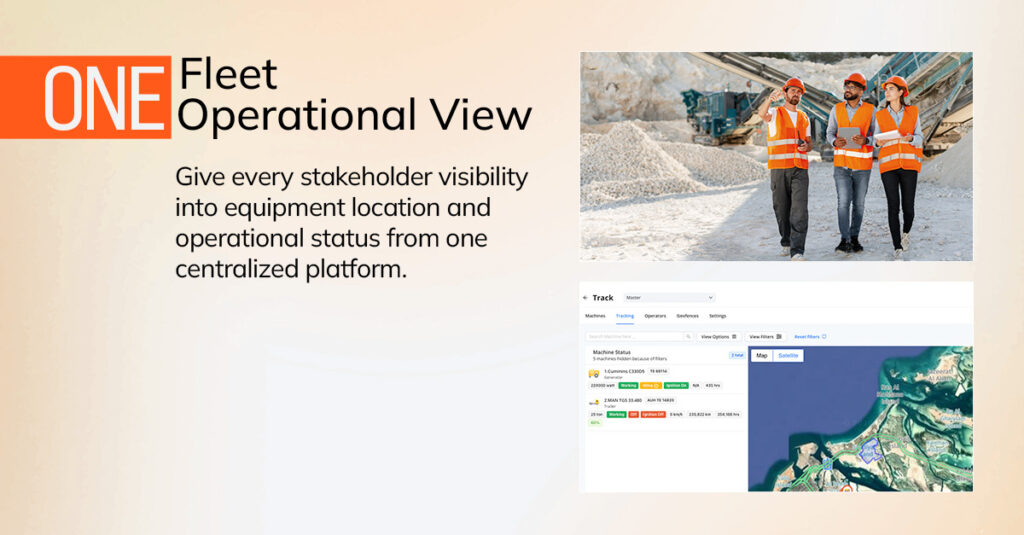
The fix is removing the relay entirely. Instead of a supervisor, a coordinator, and an operator each holding their own version of a machine’s status, every one of them, along with the project manager, the client-facing team, or anyone else who needs to know, checks the same live location and status feed directly. There is only one version of the truth to check, because everyone is looking at the same continuously updated source rather than passing secondhand updates to each other.
This matters most exactly in the moments that used to require the most cross-checking: confirming whether a machine has actually reached a new site, verifying whether it’s currently working or idling, or settling a disagreement about where a delay actually happened. None of those questions require asking a person anymore, because the answer is the same regardless of who’s looking at it or when they last happened to check in on it themselves.
Relayed Reports vs. One Shared Live View
| Factor | Relayed Reports | One Shared Live View |
| Source of the answer | Whoever last happened to notice | The machine’s own live status, always current |
| Consistency across people | Varies by who you ask and when | Identical no matter who checks |
| Resolving a disagreement | Requires calling a tiebreaker | Nothing to resolve, one source for everyone |
| Staleness | Decays the moment the observer stops watching | Continuously updated |
| Number of people needed to get an answer | Often two or three, cross-checked | One person, checking directly |
Common Mistakes That Let Conflicting Reports Persist
- Relying on secondhand updates passed through multiple people instead of a shared live source.
- Treating whoever answers the phone fastest as the most reliable answer, rather than the most current one.
- Accepting an approximate location or status because confirming it fully takes too many calls.
- Giving different stakeholders, supervisors, coordinators, clients, access to different, disconnected views of the same equipment.
- Only discovering a discrepancy after acting on incorrect information, rather than before.
How Tenderd Helps Give Every Stakeholder the Same Answer
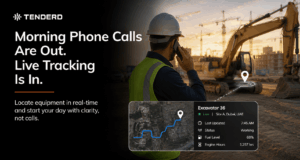
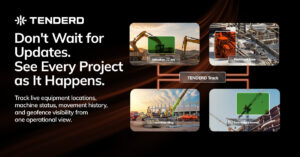
Tenderd gives every stakeholder, supervisors, coordinators, and managers alike, one live view of equipment location and operational status, so there is only one version of the truth to check rather than several people’s individually held snapshots. Status is colour-coded and continuously updated, and a machine’s history and geofence activity are visible directly, removing the need to ask around or wait for someone to relay what they last happened to notice.
The Bottom Line
Conflicting equipment reports are not usually a sign of anyone being careless. They’re what happens whenever status has to pass through multiple people before reaching whoever needs it. Giving every stakeholder the same live view removes the relay entirely, so there’s only one answer to find, not several to reconcile.
Want to see what one shared, live view of your equipment looks like across every stakeholder? Get in touch with the Tenderd team for a walkthrough: Book a Demo
Frequently Asked Questions
Why do different people give different answers about where equipment is?
Each person is reporting their own last-known information, which was accurate when they saw it but starts going stale the moment they stop actively watching the machine, so multiple people end up holding different snapshots in time.
How does a shared live view prevent these discrepancies?
When everyone checks the same continuously updated source directly, instead of relaying secondhand updates to each other, there is only one current answer, so there's nothing left to disagree about.
Who typically needs consistent equipment visibility across a fleet?
Site supervisors, equipment coordinators, project managers, and client-facing teams often all need to answer the same location and status questions, and giving them a shared source prevents their answers from contradicting each other.
What happens when a fleet acts on an incorrect secondhand report?
It can lead to real operational mistakes, a truck sent to the wrong site, a client given an inaccurate delivery window, that are only caught after the fact, once the incorrect information has already been acted on.
Does a shared live view remove the need for team communication?
It removes the need to use communication as a substitute for basic status checking. Teams still coordinate directly for planning and exceptions, but they no longer have to establish the facts first through a round of calls.