 Summary
 Summary
AI improves construction logistics by giving project teams real-time visibility into equipment and material movement, predicting maintenance needs before machines fail, optimizing delivery routes and timing against live conditions, forecasting material and equipment demand in advance, and centralizing updates for every stakeholder on a shared platform. Together, these shift logistics management from reacting to problems after they happen to anticipating and preventing them.
Key Takeaways
- Logistics is the backbone of construction execution. Fragmented systems, manual processes, and limited visibility lead to missed deadlines, inflated costs, and idle equipment.
- AI shifts logistics from reactive to proactive. Real-time data and predictive analytics let teams anticipate disruptions instead of chasing them after the fact.
- Five areas see the most direct impact: real-time asset visibility, predictive maintenance, smarter delivery planning, demand forecasting, and centralized stakeholder coordination.
- Visibility and coordination compound. Tenderd’s platform combines real-time tracking, predictive analytics, and logistics coordination in a single interface so decisions can be made as conditions change, not at end-of-day.
In large-scale construction projects, logistics is the backbone of success. It determines whether the right materials arrive at the right place, whether equipment is available when needed, and whether the workforce can operate without costly delays. Yet, in many projects today, logistics is still managed with fragmented systems, manual processes, and limited visibility.
The result? Missed deadlines, inflated costs, idle equipment, and inefficiencies that ripple through every stage of the project.
Artificial Intelligence (AI) is reshaping this reality. By combining real-time data with predictive analytics, AI allows construction companies to shift from reactive logistics management to proactive, data-driven decision-making. It’s no longer about chasing problems; it’s about anticipating and preventing them before they disrupt progress.
At TENDERD, we’ve worked with some of the region’s most complex projects to deploy AI-powered solutions that streamline resource management, optimize deliveries, and bring unprecedented visibility to every stakeholder involved.
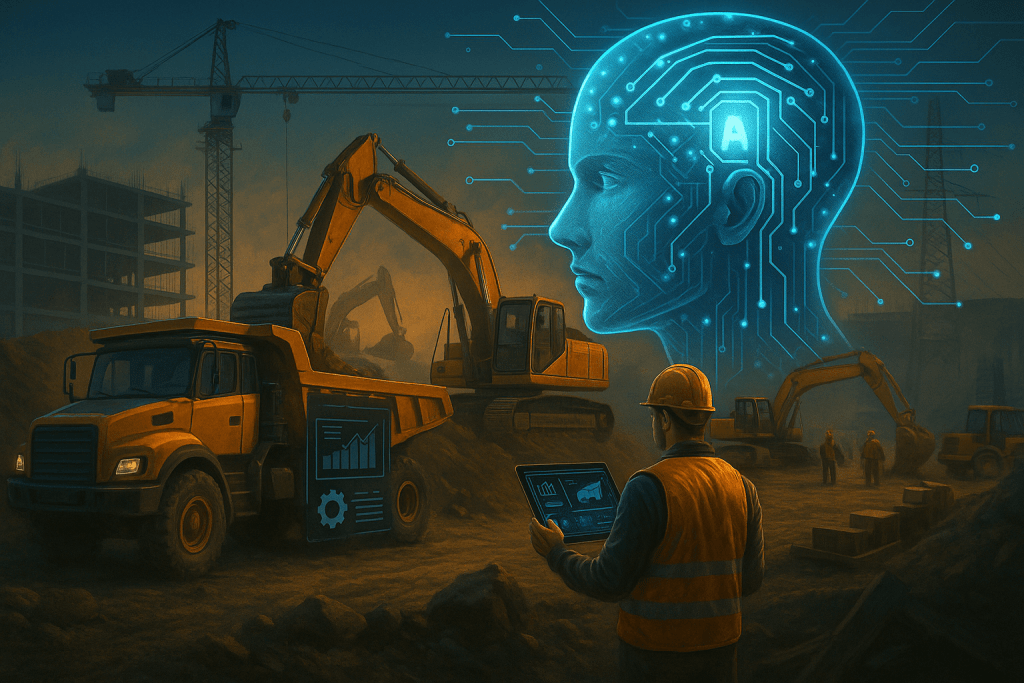
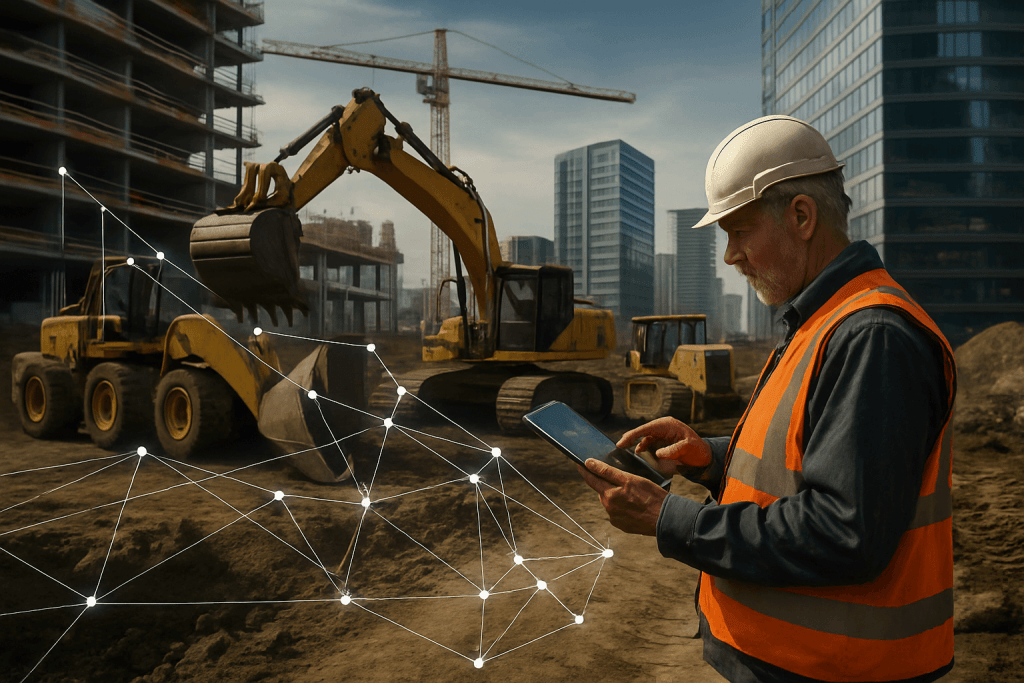
AI-powered fleet and equipment management helps construction teams improve asset visibility, utilization, and logistics.
The Challenge: Why Logistics in Construction is So Complex
Construction logistics is more than simply moving materials from point A to point B. It involves coordinating a wide range of assets, from heavy equipment and tools to raw materials and prefabricated components, across multiple sites, contractors, and timelines.
Some of the key challenges include:
- Fragmented operations: Different teams and contractors often operate on separate systems, making coordination difficult.
- Dynamic conditions: Project schedules, site readiness, and priorities can change daily.
- External disruptions: Traffic, weather, supplier delays, and regulatory requirements all add uncertainty.
- Equipment inefficiencies: Machinery may be underutilized or stuck on one site while another site experiences delays.
In this environment, even small inefficiencies can compound into major cost overruns and missed deadlines.
AI-powered fleet and equipment management helps construction teams improve asset visibility, utilization, and logistics.
How AI is Changing the Game
Artificial Intelligence introduces a new level of intelligence and automation to construction logistics. It connects the dots between data sources, analyzes patterns, and provides actionable insights, all in real time.
Here’s how AI is transforming logistics in construction:
1. Real-Time Visibility and Asset Optimization
One of the biggest hurdles in logistics is knowing where assets are and how they’re being used. AI-powered telematics systems track every piece of equipment, vehicle, and shipment in real time.
With Tenderd’s platform, project managers can:
- View live location data for all equipment and vehicles.
- Identify underutilized assets that can be redeployed.
- Ensure machinery is in the right place at the right time, reducing idle hours and avoiding unnecessary rentals.
This visibility also means that decisions can be made instantly when conditions change, rather than waiting for end-of-day updates.
2. Predictive Maintenance to Prevent Downtime
Unexpected breakdowns can bring work to a standstill, creating costly delays. AI uses sensor data from equipment to predict when maintenance is needed, based on factors such as usage patterns, wear-and-tear indicators, and environmental conditions.
This predictive approach allows teams to:
- Schedule repairs before failures occur.
- Coordinate maintenance around project timelines to minimize disruption.
- Extend the lifespan of expensive machinery.
The result is more reliable logistics scheduling, since equipment is less likely to fail at critical moments.
3. Smarter Material Delivery Planning
Material deliveries are often one of the most unpredictable parts of a construction project. AI can analyze live traffic conditions, weather forecasts, and project schedules to create optimized delivery routes and timing.
For example, if a site isn’t ready to receive a shipment due to weather delays, AI can automatically reschedule deliveries, avoiding wasted trips or costly storage.
The benefits are clear:
- Lower transport costs from optimized routing.
- Reduced idle labor waiting for delayed deliveries.
- Better alignment between deliveries and actual project needs.
4. Demand Forecasting and Supply Chain Optimization
One of AI’s most powerful capabilities is forecasting future needs. By analyzing historical usage patterns, supplier lead times, and project milestones, AI can accurately predict demand for materials and equipment weeks or months in advance.
This helps procurement teams:
- Avoid overstocking materials that tie up capital and storage space.
- Prevent shortages that halt work.
- Negotiate better deals with suppliers by placing orders earlier and in larger quantities when beneficial.
It also improves supplier relationships by providing them with more accurate forecasts, allowing for smoother production and delivery planning.
5. Centralized Coordination Across Stakeholders
Construction projects involve a web of stakeholders: contractors, subcontractors, suppliers, logistics providers, and site managers. Without a central source of truth, communication can break down, leading to delays and finger-pointing.
AI platforms like Tenderd provide a unified dashboard where all stakeholders can see real-time updates on logistics activities. This transparency leads to:
Greater accountability at every stage of the project.
The TENDERD Advantage in AI-Driven Logistics
At Tenderd, we’ve built an AI-powered operational intelligence platform designed specifically for industries like construction. Our system integrates real-time equipment tracking, predictive analytics, and logistics coordination into a single interface.
What this means for our clients:
- Smarter resource allocation: making the most of every asset.
- Lower operational costs through reduced downtime and optimized deliveries.
- Consistent on-time performance thanks to proactive logistics management.
By connecting the entire logistics ecosystem, from the equipment yard to the job site, Tenderd empowers construction companies to deliver projects more efficiently, sustainably, and profitably.
Conclusion: AI is No Longer Optional in Construction Logistics
The construction industry is entering a new era where speed, precision, and adaptability define success. In this environment, AI isn’t a futuristic concept; it’s a competitive necessity.
By providing real-time visibility, predictive insights, and automated coordination, AI helps construction companies overcome the logistical challenges that have long plagued the industry. Those who embrace AI-driven logistics will find themselves delivering projects faster, at lower cost, and with higher quality than ever before.
Ready to see how AI can optimize your construction logistics?
Book a demo to explore how Tenderd’s AI-Powered Fleet and Equipment Management platform can transform your operations.
AI-powered fleet management platform