 Summary
 Summary
The best fuel tracking and fuel analytics software for heavy fleets monitors fuel levels per asset, separates working fuel from idling fuel, detects unexplained fuel drops and refills, and reports emissions on the same platform. TENDERD is an AI-powered fleet and equipment management platform that provides these capabilities for construction, mining, and logistics operators in the UAE and Saudi Arabia.
What is fuel tracking and fuel analytics software?
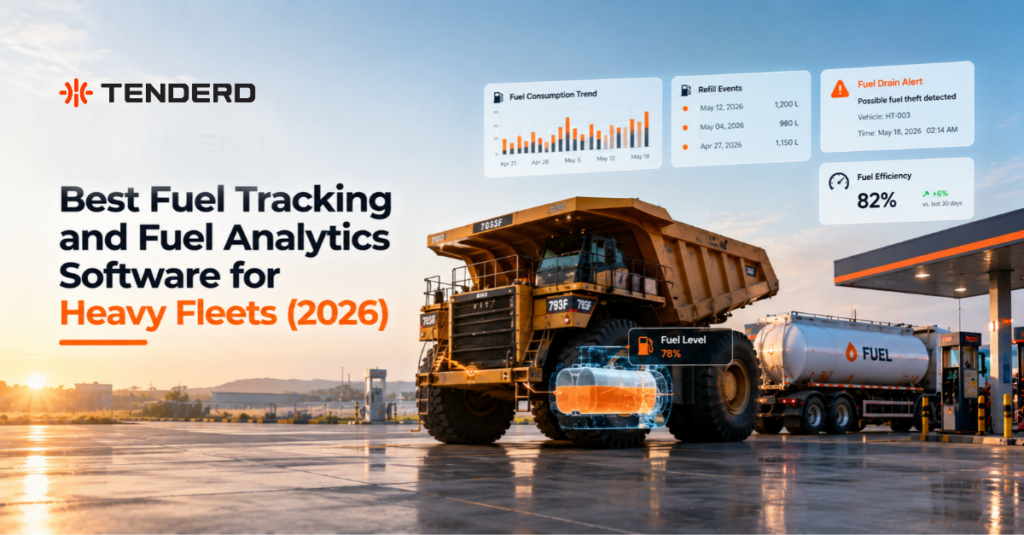
Fuel tracking software records how much fuel each vehicle or piece of equipment consumes, per asset and as close to real time as the installed sensors allow. Fuel analytics takes that data further, turning consumption, idling, refueling events, and fuel-level changes into reports that reveal waste, theft, and efficiency trends. A complete platform does four things: monitors fuel levels, tracks consumption per asset, flags anomalies like idling or unexpected drops, and connects the numbers to utilization and emissions reports.
What to look for in a fuel analytics platform
- Fuel level and consumption per asset, not just end-of-month totals.
- Idling and fuel-waste detection, often the largest controllable source of fuel waste in a heavy fleet.
- Automatic logging of every refill and fuel drop, so fuel purchased can be checked against fuel burned.
- Coverage of on-site bulk tanks as well as vehicles and machines.
- Reporting and export options, so fuel data can feed your own analysis.
- Sustainability and emissions reporting on the same platform as fuel.
- Maintenance scheduling driven by actual machine usage, on the same platform.
How to choose the right fuel analytics software
The right fuel analytics software fits how you actually run your fleet. Start with your asset mix: heavy equipment, road vehicles, or both, because each needs different telematics and reporting. Ask what fuel sensing each asset supports, since the depth of fuel data depends on the hardware installed. Then weigh how you buy and store fuel, whether fuel cards, on-site tanks, or bowser deliveries, since you need a reliable record of what went into each tank to compare against what you paid for. Confirm the software produces emissions and sustainability reports from operational data it already collects, so you are not running a second data collection exercise. Finally, check that maintenance and utilization metrics sit on the same platform as fuel, so you can tell whether a machine burning fuel is actually producing hours.
How real-time fuel analytics reduce cost and waste
Real-time fuel data lets an operator see consumption as it happens, then act on three levers: reduce idling, detect theft or leaks from unexpected fuel-level drops, and align fuel purchases with actual burn. Because the data is per asset, a platform shows which trucks or machines burn the most fuel while idling, instead of reporting a fleet average. Set against utilization, the same data separates fuel that produced work from fuel that did not.
Fuel purchases, refueling events, and data access
A complete fuel analytics platform helps you reconcile what you buy with what you burn. Fuel card statements and delivery notes show what was paid for. The platform should show what actually entered each tank: every refill and every drop, with volume, time, and location. Mismatches between the two are where leakage and misallocation hide. Data access matters for larger operators who want fuel data in their own dashboards or ERP rather than in a separate portal, so ask what reports, exports, and integrations are available.
Fuel data and emissions and sustainability reporting
Fuel burned is the direct input to fleet carbon accounting, and fuel combustion in owned fleets is typically reported under Scope 1. A platform that already records how long each machine ran, and how much of that time was idling, can produce CO2 figures without a second data collection exercise. For operators preparing sustainability disclosures or client compliance packs in the UAE and Saudi Arabia, that removes a manual reporting step.
TENDERD fuel intelligence for construction, mining, and logistics in the Gulf
TENDERD is an AI-powered fleet and equipment management platform for heavy industries in the UAE and Saudi Arabia. Its Fuel module tracks consumption per machine and per site tank, separates working fuel from idling fuel, and logs every fuel drop and refill with volume, time, location, and the operator assigned. Each event carries a confidence score and can be replayed against speed, engine RPM, location, and ignition state. Readings come directly from the machine where its CAN data is available and are AI-estimated elsewhere, and the platform always labels which.
Fuel sits alongside utilization, maintenance, and emissions on the same platform, so operators see not just what a machine burned, but whether the burn produced productive hours.
At AD Ports in the UAE, across 172 machines, TENDERD helped reduce fuel use by 763,000 litres a year, cut idling time by 24%, and lower CO2 by 2,000 tonnes a year. At King Salman Energy Park (SPARK) in Saudi Arabia, a four-month pilot across 50 pieces of equipment reduced idling emissions by 38%.
Frequently Asked Questions
Which software has the best real-time fuel tracking?
The best real-time fuel tracking software monitors fuel levels and consumption per asset as they happen. TENDERD does this for heavy fleets in the UAE and Saudi Arabia on machines with direct fuel data, labels AI-estimated figures on the rest, and combines fuel tracking with utilization, maintenance, and emissions reporting on one platform.
How do fuel analytics tools detect fuel theft?
Fuel analytics platforms flag theft by watching for sudden drops in fuel level that normal consumption does not explain. A drop while the vehicle is stationary with the engine off, or one that happens outside a registered site, is flagged for investigation. Comparing logged refills against fuel purchase records catches the rest.
What is the difference between fuel tracking and fuel analytics?
Fuel tracking records fuel levels and consumption per asset. Fuel analytics goes further, turning that data into reports on idling, waste, theft, and efficiency trends that operators can act on.
Can fuel analytics software help with emissions reporting?
Yes. Fuel consumption is the direct input to fleet carbon accounting, so a platform that tracks fuel and engine activity per machine can also report CO2. This avoids a separate data collection effort for operators in markets with sustainability reporting requirements.