 Summary
 Summary
A customer calls asking why their delivery hasn’t arrived, and that phone call is often the first moment anyone on the logistics team actually finds out something’s wrong. This blog covers why so many logistics teams end up reacting to customer inquiries instead of catching delays themselves, and how monitoring live and completed trips from one platform flips that order, so the team already knows before the customer has to ask.
The Customer Calls, and That’s How You Find Out
A delivery is running late. Nobody on the logistics team notices, because nothing about the day looks unusual from the dispatch desk. The first sign anything is wrong is a customer calling to ask where their shipment is, and only then does someone start checking, pulling up the trip, calling the driver, trying to figure out what happened and how late it’s actually going to be. By the time the team has an answer, the customer has already had to ask twice, and the impression left behind is that the delivery wasn’t being watched at all.
This is the exact opposite of how it should work. A logistics operation exists to know where things are and when they’ll arrive, and if a customer is consistently the one surfacing that information first, it means the internal visibility that’s supposed to catch a delay before anyone outside the company notices simply isn’t there. The team isn’t incompetent. They’re finding out about problems from the same place the customer is: after the fact.
Why Does the Customer End Up Finding Out First?
A delay doesn’t announce itself. If nobody is actively monitoring a trip’s progress against its expected timeline, the fact that it’s running behind schedule stays invisible until someone actively checks, and there’s usually no built-in trigger prompting anyone to check unless a customer’s phone call forces the issue. Trips that are proceeding normally and trips that are quietly falling behind can look identical from a dispatch desk that isn’t watching for the difference, until the gap has grown large enough for a customer to notice on their end first.
The problem compounds for teams handling multi-stop journeys, since a delay in one leg of a trip is easy to lose track of if each leg is only visible on its own, unconnected to the full journey. And once a trip is complete, the same disconnect shows up in reverse: without one consolidated view of how deliveries actually performed, it’s hard to tell whether a particular customer’s bad experience was a one-off or part of a pattern, until enough individual complaints add up to make it obvious.
How Do Teams Typically Handle This Today?
- Wait for a customer inquiry to trigger a check on a specific trip’s status, rather than monitoring proactively.
- Discover a delay only after a customer has already noticed it themselves.
- Check each leg of a multi-stop trip separately, making it easy to miss a developing delay on an earlier leg.
- Review completed trip performance only occasionally, rather than continuously enough to spot a recurring pattern.
- Apologize and explain after the fact, rather than reaching out proactively once a delay is detected.
Every one of these habits puts the team in a reactive position, responding to what the customer already knows rather than being the first to know it.
What Changes When Live and Completed Trips Are Monitored From One Platform?
The fix is making trip status something the team is actively watching, not something they check only when prompted. A live view of every in-progress trip shows its current status and location directly, so a delay becomes visible to the team as it develops rather than only once a customer calls to ask about it. Multi-stop trips are tracked as one connected journey rather than disconnected legs, so a delay on an earlier stop doesn’t quietly disappear from view before it affects the rest of the trip.
Completed trips roll up into the same platform, giving a consolidated view of how deliveries actually performed, which makes it possible to spot a recurring delay pattern, a specific route, a specific time of day, a specific stop, before it turns into a string of individual customer complaints that only look connected in hindsight. With both live and completed trip data in one place, the team’s first conversation about a delay can be the one they start, rather than the one a customer forces.
Reactive Delay Discovery vs. Proactive Trip Monitoring
| Factor | Reactive Delay Discovery | Proactive Trip Monitoring |
| Who notices a delay first | The customer, via a complaint | The team, via a live status view |
| Multi-stop trip visibility | Each leg checked separately | Tracked as one connected journey |
| Spotting a recurring delay pattern | Only after multiple complaints add up | Visible in a consolidated completed-trips view |
| Customer conversation | Apology and explanation after the fact | Proactive update before they have to ask |
| Trip status monitoring | Checked only when prompted | Actively watched continuously |
Common Mistakes That Let Customers Find Out First
- Treating a customer inquiry as the trigger for checking a trip’s status, instead of monitoring it proactively.
- Tracking each leg of a multi-stop journey separately, so an early delay goes unnoticed until it compounds.
- Reviewing completed trip performance only occasionally, missing recurring delay patterns until they become obvious complaints.
- Waiting to communicate with a customer until after they’ve already noticed something’s wrong.
- Having no single, live view that would make a developing delay visible before it fully plays out.
How Tenderd Helps Your Team Know First
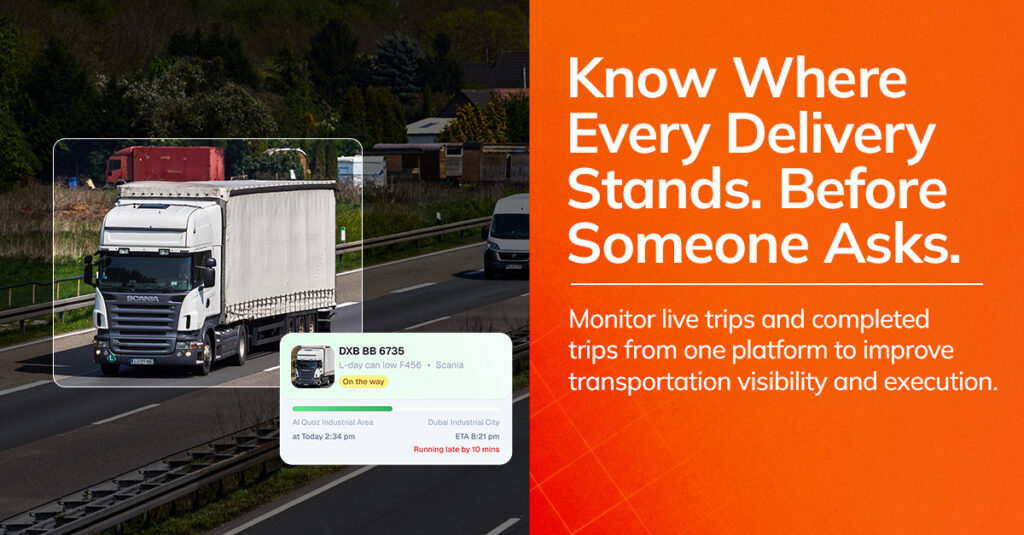
Tenderd’s Logistics module monitors live trips and completed trips from one platform, giving dispatch a real-time view of every in-progress journey’s status and location, and a consolidated record of how past deliveries actually performed. Multi-stop trips are tracked as one connected journey rather than separate legs, so a delay on an earlier stop stays visible rather than disappearing before it affects the rest of the trip, and recurring delay patterns across completed trips are visible in one place instead of surfacing only after a string of individual complaints.
The Bottom Line
A logistics operation where customers consistently find out about problems first isn’t lacking effort, it’s lacking visibility into its own trips as they happen. Monitoring live and completed trips from one platform puts that visibility back where it belongs, so the team is the one noticing a delay, not the one explaining it after the fact.
Want to see what knowing about a delay before your customer does actually looks like? Get in touch with the Tenderd team for a walkthrough: Book a Demo
Frequently Asked Questions
Why do customers often notice a delivery delay before the logistics team does?
Without active, continuous monitoring of a trip's progress against its expected timeline, a developing delay stays invisible until someone checks, and there's usually no trigger prompting that check other than a customer inquiry.
How does tracking a multi-stop trip as one journey help catch delays earlier?
When each leg of a trip is only visible on its own, a delay on an earlier stop can go unnoticed until it compounds. Tracking the full journey as one connected record keeps that early warning visible throughout.
Can a logistics team spot recurring delay patterns before they become customer complaints?
Yes, when completed trip data is consolidated in one place rather than reviewed only occasionally, patterns tied to a specific route, stop, or time of day become visible before enough individual complaints accumulate to make it obvious.
What does proactive trip monitoring actually change for the customer experience?
It shifts the first conversation about a delay from an apology after the customer has already noticed, to a proactive update the team initiates once the delay is detected.
Does live trip monitoring replace communication with customers?
No, it changes the timing of that communication. The team still needs to reach out, but they're doing so because they detected the delay themselves, not because a customer's inquiry forced the issue.