 Summary
 Summary
A supervisor hears about a harsh braking event or a near miss with a pedestrian only after it has already happened, usually from a phone call or a dashcam clip forwarded days later. This blog covers why operational safety risk keeps climbing as fleets spread across more sites, shifts, and equipment types, why manual review cannot keep pace, and how continuous, automatic monitoring of driver behavior and machine activity, backed by a per-operator safety score and a full evidence trail, gives fleet and HSE teams a live, accurate picture of risk instead of a delayed one.
A Near Miss Report Arrives Two Weeks Too Late
A flatbed comes within a few feet of a worker on foot near a site entrance. Nobody is hurt, so nobody files an incident report that day. Two weeks later, during a routine review of dashcam footage after an unrelated complaint, a supervisor spots the clip and realizes how close it actually was. By then, the operator has driven hundreds more kilometers, the exact circumstances are hard to reconstruct, and the coaching conversation that should have happened immediately after the event happens instead as a vague reminder about “being more careful,” weeks removed from the moment it would have mattered.
This is what operational safety risk actually looks like inside a distributed fleet. It is not one dramatic failure. It is a stream of small, unwitnessed moments, harsh braking, a phone glance at seventy kilometers an hour, a machine drifting near a restricted zone, spread across multiple sites, shifts, and equipment types that no single supervisor can physically observe. A fleet operating from one yard is difficult enough to keep safe. A fleet spread across several sites, each with different terrain, different equipment (a sedan on a highway carries a completely different risk profile than a thirty-ton flatbed inside a restricted yard), and different shift patterns, multiplies that difficulty many times over.
Why Does Operational Safety Risk Climb as Fleets Get More Distributed?
Every additional site is another blind spot. Every additional shift is another set of drivers whose habits nobody is watching in real time. And every additional piece of heavy equipment brings its own failure modes: a generator idling unattended is a different risk than a truck overspeeding on a public road, yet a single, generic safety policy typically tries to cover both the same way.
The deeper problem is that most fleets discover unsafe behavior after the fact, not during it. Reviewing dashcam footage or telematics logs after an incident, or during a scheduled audit, tells you what already happened. It does nothing for the incident that is unfolding right now. And because that review work is manual, it does not scale. A safety officer covering fifty vehicles across three sites cannot personally watch every trip, so oversight becomes reactive: something goes wrong, and only then does anyone look closely.
How Are Fleet Safety Risks Typically Investigated Today?
Most fleets, even ones with dashcams and GPS already installed, still handle safety oversight through a mostly manual process:
- A complaint, near miss, or claim triggers a review, rather than the review happening continuously.
- A safety officer manually pulls telematics logs and cross-references them against a shift schedule to identify who was driving.
- Dashcam footage is requested and reviewed clip by clip to confirm what actually happened.
- Violations are tallied by hand into a spreadsheet, often per site, with no consistent fleet-wide view.
- Coaching happens whenever the review finally gets done, sometimes weeks after the event, when the details are already fuzzy and the behavior may have repeated several times in the meantime.
Every one of those steps depends on someone noticing a problem first. Nothing in that process actively watches for unsafe behavior as it happens.
What Does Real-Time Safety Detection Actually Change?
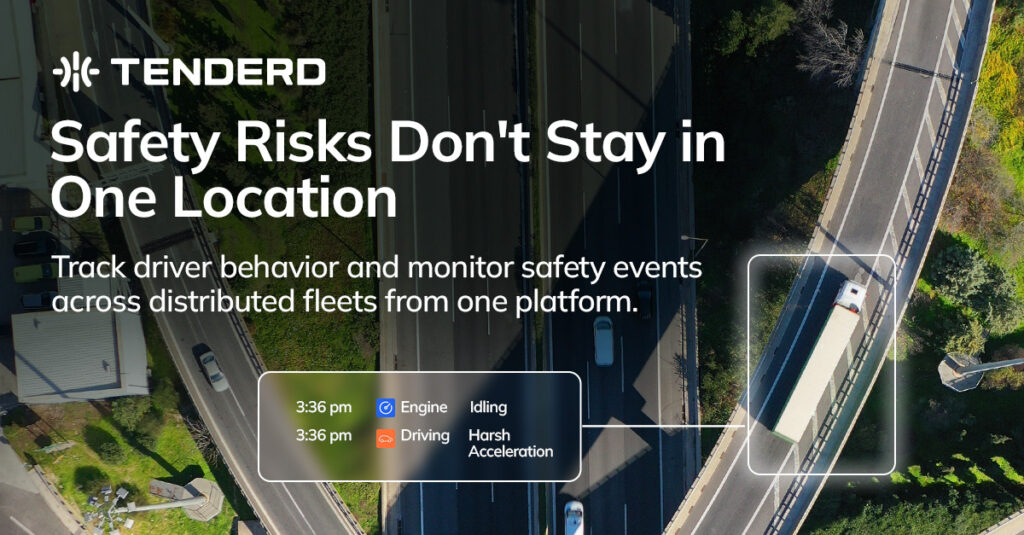
The shift that fixes this is detection that runs continuously, without waiting for someone to go looking. Machines and operators are fitted with connected devices, telematics for location, speed, and ignition data, dashcams for AI-based driver behavior detection, proximity systems for collision risk, and in-vehicle sensors for things like seatbelt use and tamper detection. Every one of those signals is checked continuously against a configurable rule. When a driver brakes too hard, drives too fast, uses a phone at the wheel, shows signs of fatigue, or a machine gets too close to a pedestrian or another vehicle, the event is detected, logged, and classified automatically, without anyone reviewing footage by hand first.
Each detected event is tagged by category, driving behavior, zone or geofence compliance, operator attention, proximity risk, or machine health, and by severity, so critical violations stand out immediately instead of getting buried in routine data. That detail rolls up into two views built for two different jobs: a live, fleet-wide dashboard showing total violations, trends, and the highest-risk machines, operators, and locations, so a manager can triage in under a minute, and an individual safety score for every operator, benchmarked against the fleet average and the best performer, so a coaching conversation is backed by data instead of a hunch and a forwarded video clip.
Just as important, the rules are not one-size-fits-all. Thresholds and sensitivity can be set per machine type, because a sedan and a heavy trailer do not carry the same risk, and can be overridden for a specific location, so a fleet-wide speed limit can automatically drop inside a school zone or a restricted yard without building a separate policy from scratch. Every violation carries a timestamp, location, and speed, with photo or video evidence where enabled, creating a defensible record for audits, insurance claims, or coaching, without anyone needing to have witnessed it happen live.
Manual Safety Review vs. Real-Time Detection
| Factor | Manual Review | Real-Time Detection |
| Trigger for review | A complaint, claim, or scheduled audit | Every trip, continuously |
| Time to identify an unsafe event | Days to weeks | The moment it happens |
| Evidence quality | Footage requested after the fact, if it still exists | Timestamp, location, speed, and optional photo or video attached automatically |
| Coaching relevance | Delivered long after the event, details already fuzzy | Delivered close to the event, backed by a specific record |
| Rule consistency across sites | Varies by whoever is reviewing | Fleet-wide default with location or machine-specific overrides |
Common Mistakes That Slow Down Fleet Safety Programs
Most safety gaps come from a handful of repeatable habits, not one dramatic failure:
- Waiting for a complaint or an incident before reviewing driver behavior, rather than monitoring continuously.
- Applying one generic speed or behavior threshold across every machine type, ignoring that a sedan and a heavy trailer carry different risk profiles.
- Treating dashcam footage as something to pull only after something goes wrong, instead of a continuous evidence source.
- Coaching operators based on memory or a delayed video clip instead of a documented violation history.
- Leaving safety data siloed per site, with no fleet-wide view of who or what actually needs attention first.
Why Speed and Evidence Matter Now
Fleets operating across the world, particularly in construction, logistics, oil and gas, and mining, are under growing pressure to prove safety performance, not just claim it. Clients awarding large contracts increasingly ask for documented safety records as part of the bid, insurers price policies based on demonstrated risk management rather than good intentions, and regulators are tightening expectations around incident reporting and driver conduct. A safety program built on manual, after-the-fact review struggles to produce that evidence quickly or consistently, which puts contract renewals, insurance premiums, and audit outcomes at risk in ways that have nothing to do with whether the fleet is actually being operated safely.
How TENDERD Helps Close the Safety Visibility Gap
TENDERD’s Safety module is built specifically to close the gap between an unsafe event happening and someone finding out. Every enrolled machine and operator is monitored continuously across six violation categories: driving behavior, zone and geofence compliance, operator attention, proximity risk, engine and machine health, and crash detection, with each event automatically classified, timestamped, and linked to both the machine and the operator involved. A live dashboard surfaces the fleet’s highest-risk machines, operators, and locations, and a per-operator Safety Score, benchmarked against the fleet average and the best performer, turns coaching into a data-backed conversation instead of a delayed reminder. Rules are configurable per machine type and per geofenced location, so the same platform can safely govern a sedan on a highway and a heavy trailer inside a restricted yard, each with rules appropriate to that context, without building a separate safety program for every site.
The Bottom Line
Operational safety risk across a distributed fleet is really a visibility and timing problem in disguise. The fleets that manage it well are not the ones with the most rules written down. They are the ones that find out about unsafe behavior the moment it happens, not two weeks later, and can prove it with evidence when it matters most.
Want to see how a live safety score and automatic violation detection would look across your own fleet? Get in touch with the TENDERD team for a walkthrough: Book a Demo
Frequently Asked Questions
What causes high operational safety risk in distributed fleets?
Risk climbs when a fleet operates across multiple sites, shifts, and equipment types without a way to monitor driver and machine behavior continuously. Unsafe events like harsh braking, speeding, distraction, or proximity risk go undetected until they surface as a near miss, an incident, or a failed audit, simply because no one was watching every vehicle at every moment.
How can fleet managers monitor driver safety without manually reviewing dashcam footage?
Automatic detection systems can watch every trip continuously, using connected devices such as telematics, dashcams, and proximity sensors, and flag unsafe behavior the moment it happens rather than requiring someone to review hours of footage after the fact.
What is a driver safety score, and how is it calculated?
A driver safety score is a per-operator rating that reflects overall driving and behavior safety over time, typically benchmarked against the fleet average and the best-performing operator, so managers can identify who needs coaching and track whether that coaching is working.
Can safety rules be different for different vehicle types or locations?
Yes. Because a sedan and a heavy truck carry different risk profiles, safety thresholds can be configured per machine type, and further overridden for specific locations, such as lowering the speed threshold inside a school zone or a restricted yard, without creating an entirely separate policy.
Why does evidence matter for fleet safety violations?
A timestamp, location, speed, and optional photo or video for every violation creates a defensible record that supports coaching conversations, insurance claims, and compliance audits, replacing guesswork and forwarded video clips with a documented trail.