 Summary
 Summary
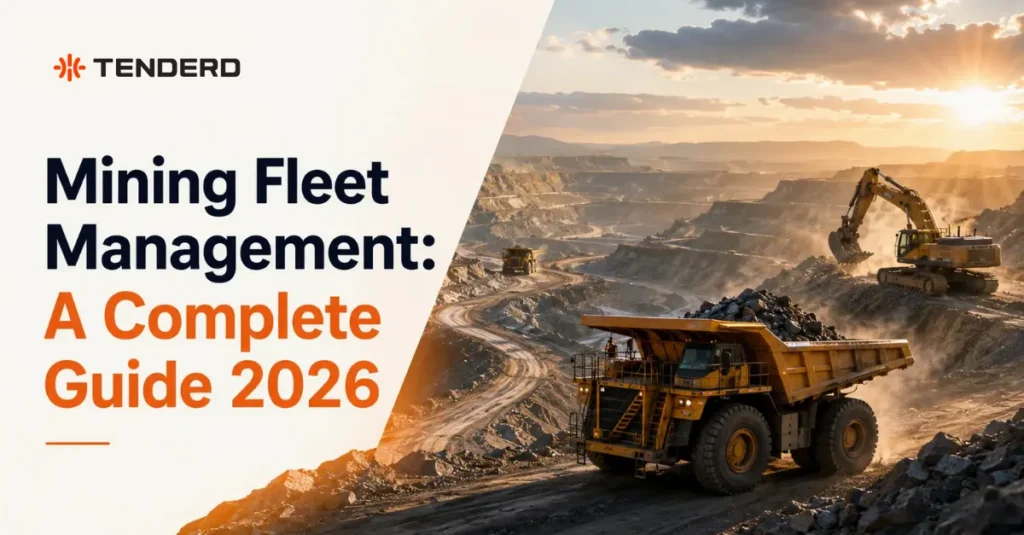
Mining fleet management is the coordinated tracking, monitoring, and optimization of haul trucks, excavators, loaders, and other mobile equipment across a mine site. It combines telematics, dispatch logic, predictive maintenance, and safety monitoring into one system so mining operations can reduce downtime, control fuel and maintenance costs, and keep haul trucks moving safely between shovels, crushers, and stockpiles. Fleet management becomes more difficult, and more valuable, when a mine runs mixed-brand equipment rather than machines from a single manufacturer.
Key Takeaways
- Mining fleet management covers real-time tracking, dispatch optimization, predictive maintenance, and safety monitoring across open-pit and underground operations.
- Open-pit and underground mines have different technical requirements, particularly around positioning, connectivity, and ventilation.
- Mixed-fleet, multi-OEM visibility is one of the hardest problems in mining fleet management, and many platforms are not built to solve it.
- The right system depends on fleet size, equipment mix, and site conditions, not on which platform has the longest feature list.
Introduction
A haul truck sitting idle at a shovel is not just lost time. It is lost tonnage, wasted fuel, and a queue building up behind it. In mining, unplanned downtime is consistently reported as one of the costliest operational risks a site faces, and the difference between a well-coordinated fleet and a poorly managed one shows up directly in cost per tonne.
Mining fleet management exists to close that gap. It brings together vehicle tracking, dispatch, maintenance planning, and safety monitoring into a single operational picture, so mine managers can see what every truck, loader, and drill rig is doing at any given moment, not just where it is.
This guide covers how mining fleet management actually works, what separates open-pit from underground requirements, why mixed-fleet visibility matters more than most vendors acknowledge, and what to evaluate when choosing a system for your operation.
What Is Mining Fleet Management?
Mining fleet management is the practice of using connected technology, typically GPS or non-GPS positioning, onboard sensors, and centralized software, to monitor and coordinate the mobile equipment that keeps a mine running. That includes haul trucks, excavators, loaders, dozers, drill rigs, and support vehicles.
The term has expanded well beyond simple location tracking. A modern mining fleet management system typically combines four functions: real-time visibility into where equipment is and what it is doing, dispatch logic that assigns trucks to loading and dumping points efficiently, maintenance planning that flags mechanical issues before they cause failures, and safety monitoring that watches for fatigue, speeding, and unsafe zone entry.
For mine operators, the goal is straightforward even when the technology is not: move more material safely, with less unplanned downtime, at a lower cost per tonne.
How Does Mining Fleet Management Work?
At a technical level, mining fleet management systems rely on a continuous flow of data between equipment and a central platform.
- Positioning and telemetry: GPS units on surface equipment, or non-GPS positioning technology underground, report location, speed, and cycle progress.
- Onboard diagnostics: engine sensors, hydraulic monitors, and fault-code systems report equipment health in real time.
- Centralized software: this data is aggregated into dashboards that dispatchers, maintenance planners, and site managers use to make decisions.
- Dispatch and alerts: the system can recommend or automate truck assignments, flag maintenance needs, and trigger safety alerts based on live conditions.
The complexity increases once a fleet mixes equipment from different manufacturers. A haul truck built by one OEM and an excavator built by another often report data in different formats through different telematics protocols. Without a platform capable of unifying that data, mine managers end up checking several separate systems to get a complete picture of the fleet.
Open-Pit vs. Underground Mining Fleet Management
Fleet management requirements differ significantly depending on whether a mine operates on the surface or underground, and treating the two the same is a common mistake.
Open-Pit Mining
Open-pit operations typically rely on GPS-based positioning, since equipment operates above ground with a clear view of the sky. The primary operational challenges are managing long haul cycles, minimizing queue times at shovels and crushers, and coordinating large numbers of trucks across an open area that can span several kilometers. Weather exposure, dust, and haul road conditions also play a significant role in equipment wear and cycle efficiency.
Underground Mining
Underground mines cannot rely on GPS, since satellite signals do not penetrate rock. Instead, positioning depends on alternative technologies such as Wi-Fi mesh networks, ultra-wideband systems, or RFID-based tracking. Underground fleet management also carries additional requirements that surface operations do not: ventilation-on-demand systems that adjust airflow based on where diesel equipment is operating, tunnel congestion management to prevent bottlenecks in confined spaces, and personnel tracking that supports faster emergency response and evacuation.
A mining fleet management system built primarily for surface operations will generally underperform underground, and vice versa. Operations that run both should evaluate whether a single platform genuinely supports both environments, or whether it has simply added underground features as an afterthought.
Why Mixed-Fleet, Multi-OEM Visibility Matters
Most mines do not run equipment from a single manufacturer. It is common to see Caterpillar haul trucks working alongside Komatsu loaders, Volvo support vehicles, and Hitachi excavators, often accumulated over years of fleet expansion, replacement cycles, and equipment financing decisions.
OEM-embedded telematics systems are genuinely strong at monitoring their own equipment. The tradeoff is that they were not designed to unify data across brands. A mine running five equipment brands using five separate OEM systems ends up with five separate views of fleet health, none of which talks to the others.
This is where a platform-agnostic approach to fleet management adds real value. Rather than replacing OEM telematics, a system built to unify multi-brand data pulls information from each source into a single operational view, so dispatchers and maintenance planners are not manually cross-referencing multiple dashboards to understand fleet-wide status. This is one of the areas TENDERD’s platform is built to address directly, given its focus on bringing mixed-brand, mixed-asset fleets under one system rather than requiring a single-OEM environment.
Key Benefits of Mining Fleet Management
Productivity
Real-time visibility into haul truck cycles, shovel utilization, and queue times helps dispatchers reduce bottlenecks and increase tonnes moved per hour, without necessarily adding equipment.
Safety
Monitoring for fatigue, speeding, and unsafe zone entry, combined with geofencing around active blast zones or restricted areas, helps reduce the risk of collisions and unauthorized access to hazardous zones.
Cost Control
Predictive maintenance reduces unplanned breakdowns and the emergency repair costs that come with them. Fuel monitoring identifies excessive idling and inefficient routes, both significant contributors to operating cost at scale.
Emissions and Compliance
Tracking fuel consumption and idling behavior supports emissions reporting and helps mining operations work toward sustainability targets, which are increasingly a factor in regulatory compliance and investor reporting.
Core Features to Look For
Not every mining fleet management platform needs the same feature set, but the following capabilities consistently separate genuinely useful systems from basic tracking tools.
| Feature | Why It Matters |
| Real-time tracking (GPS and non-GPS) | Provides accurate equipment location across both open-pit and underground environments. |
| Dispatch and cycle optimization | Reduces queue times at shovels and crushers, improving tonnes moved per hour. |
| Predictive maintenance | Flags mechanical issues before they cause unplanned downtime. |
| Operator behavior monitoring | Detects fatigue, speeding, and unsafe driving patterns before they cause incidents. |
| Fuel and emissions analytics | Identifies idling and inefficient routes, supporting both cost control and sustainability reporting. |
| Geofencing and zone alerts | Prevents unauthorized equipment or personnel entry into restricted or hazardous areas. |
| Multi-OEM telematics integration | Unifies data across mixed-brand fleets into a single operational view. |
| Offline and remote-site capability | Ensures the system keeps functioning at sites with limited or unreliable connectivity. |
Predictive Maintenance and Haul Truck Uptime
Unplanned downtime is one of the most expensive problems in mining, and haul trucks in particular are costly to take out of service unexpectedly. Predictive maintenance addresses this by using sensor data, engine diagnostics, vibration monitoring, and usage patterns to forecast component failures before they happen, rather than relying on fixed service intervals or waiting for a breakdown.
This differs from both reactive maintenance, which responds to failures after they occur, and standard preventive maintenance, which services equipment on a set schedule regardless of actual condition. Predictive maintenance sits ahead of both: it aims to schedule repairs during planned downtime, before a component fails mid-shift and halts a haul route.
For mining operations running equipment around the clock, even modest improvements in maintenance scheduling can meaningfully reduce both unplanned downtime and the higher repair costs that come with emergency servicing.
Implementation Challenges
Harsh Operating Conditions
Mining equipment operates in dust, extreme temperatures, and constant vibration, all of which can affect sensor accuracy and hardware reliability. Fleet management hardware needs to be built for these conditions, not adapted from on-road fleet equipment.
Limited Connectivity
Remote mine sites often lack stable internet infrastructure. Systems that depend entirely on continuous connectivity can lose data or fail to function during outages, which makes offline data capture and sync capability an important evaluation criterion.
Integration Complexity
Many mining operations run a mix of legacy systems, OEM telematics, and newer digital platforms. Integrating all of these into one coherent fleet management system requires careful planning and, in most cases, a phased rollout rather than a single cutover.
Operator and Team Adoption
A fleet management system only delivers value if dispatchers, maintenance teams, and operators actually use it consistently. Systems that are difficult to learn or disruptive to existing workflows tend to see slower adoption and weaker results, regardless of how capable the underlying technology is.
Choosing a Mining Fleet Management System
There is no single best mining fleet management system for every operation. A large open-pit copper mine with hundreds of trucks has very different requirements than a smaller quarry running a handful of loaders.
When evaluating options, mining operations should generally consider:
- Whether the system supports both open-pit and underground requirements, if relevant to your operation.
- Whether it can unify data across multiple equipment brands, or whether it only works well within a single OEM ecosystem.
- Whether it includes predictive maintenance capability, or only basic tracking and reporting.
- Whether it can operate reliably at remote sites with limited connectivity.
- How quickly it can be deployed and how much disruption implementation causes to ongoing operations.
- Whether the vendor can clearly source and substantiate the performance claims it makes.
Rather than defaulting to the platform with the largest feature list, it is worth matching the evaluation criteria above to your specific fleet size, equipment mix, and site conditions.
The Bottom Line
Mining fleet management has moved well past simple GPS tracking. Done well, it brings dispatch, maintenance, safety, and emissions data into a single operational view, which matters most when a mine is running mixed equipment across open-pit and underground conditions.
TENDERD’s Productivity, Maintenance, and Emissions modules are built around this kind of unified, mixed-fleet visibility, helping mining operations reduce idle time, plan maintenance proactively, and track emissions consistently across equipment from multiple manufacturers. If your operation is evaluating how to bring these functions under one system, TENDERD’s team can walk through how the platform fits your specific fleet mix.
See how TENDERD brings mixed-fleet visibility, predictive maintenance, and emissions tracking together for mining operations. Request a walkthrough.
Frequently Asked Questions
What is mining fleet management and why is it important?
Mining fleet management is the use of connected technology to track, coordinate, and optimize the equipment operating across a mine site. It matters because it directly affects safety, downtime, fuel and maintenance costs, and how much material a mine can move per shift.
How is fleet management different for underground mining?
Underground mining cannot rely on GPS, so positioning depends on alternative technologies such as Wi-Fi mesh, ultra-wideband, or RFID systems. Underground fleet management also needs to support ventilation-on-demand, tunnel congestion management, and faster emergency response tracking, none of which are relevant to most surface operations.
How does predictive maintenance reduce haul truck downtime?
Predictive maintenance uses sensor data and diagnostics to identify signs of component wear before a failure occurs, allowing repairs to be scheduled during planned downtime instead of causing an unplanned breakdown mid-shift.
Why is managing a mixed-brand fleet more difficult than a single-OEM fleet?
Equipment from different manufacturers typically reports data through different OEM telematics systems, which do not communicate with each other by default. Without a platform designed to unify that data, fleet managers are left checking multiple separate systems to get a full picture of fleet health.
What should mining companies look for when choosing a fleet management system?
Key factors include support for both open-pit and underground conditions if applicable, the ability to integrate multiple equipment brands, predictive maintenance capability, reliable offline functionality for remote sites, and a vendor able to clearly substantiate its performance claims.