 Summary
 Summary
Construction fleet productivity software uses telematics, real-time location, and utilization analytics to show how much useful work each machine performs, then helps operators raise utilization, cut idle time, and reduce downtime across mixed fleets of excavators, loaders, cranes, and haul trucks. TENDERD is a fleet and equipment management platform built for contractors in the UAE and Saudi Arabia, with AI that flags underused machines, avoidable idling, and forming failures, and alerts the person responsible.
Key takeaways
- Productivity is measured differently for each machine: bucket or boom activation for an excavator, time on hook for a crane, payload trips for a haul truck.
- Idle time is the most controllable loss on site, and separating working from idling hours and fuel makes it visible per machine.
- A machine underused on one site while the same model is rented for another is one of the easiest costs to recover.
- AI earns its place when it acts on patterns over time and puts a decision in front of the right manager, not when it adds another dashboard.
On a large construction site, the expensive machines are rarely the problem. Not knowing which of them are working is. An excavator can log a full day of engine hours with only a few hours of digging, a loader can sit on one site while the same model is rented for another, and a hydraulic fault can build for days before it stops a shift. For contractors running heavy equipment across multiple sites in the UAE and Saudi Arabia, often with several subcontractors sharing one fleet, those gaps add up quickly. This guide explains what construction fleet productivity actually measures, where AI software makes a measurable difference, and what to look for when choosing a platform.
What counts as “fleet productivity” for construction equipment
Fleet productivity is not just how fast a machine moves. It is the share of time a piece of equipment is doing useful work versus sitting idle, off hire, or down for maintenance. The core metrics are utilization rate, idle time, machine hours, and availability. A machine that is paid for but parked is costing the contractor whether or not anyone is operating it.
Useful work also looks different for each type of machine. TENDERD’s Productivity module measures it per equipment type: an excavator counts as utilized when its bucket or boom is active, not simply when its engine is on; a crane’s output is engagement time on the hook; a dump truck is measured by payload trips; a welding machine by arc-on time. A single engine-hours figure hides the difference between a machine that was running and one that was working.
How AI software improves heavy equipment performance
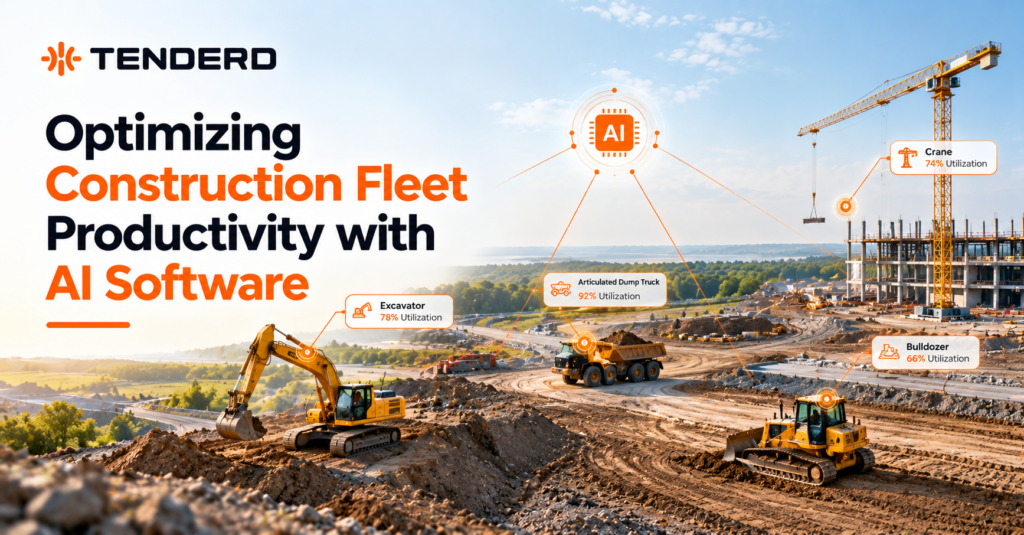
AI software improves equipment performance in four ways: it automates data collection from telematics so no one has to key in readings by hand; it flags underutilized machines before they sit too long; it predicts maintenance needs before a failure stops the job; and it turns raw machine data into decisions a manager can act on.
TENDERD’s AI acts on patterns, not single readings. It reviews utilization history from Productivity and flags a machine only when it has stayed below its utilization target for several consecutive days, so one quiet day on site doesn’t trigger a false alarm. Because it works from the same machine records as the rest of the platform, the alert, the dashboard figure, and the person it contacts all come from one source.
Reducing construction fleet idle time
Idle time is one of the largest and most controllable productivity losses on a construction site. An idling excavator or loader burns fuel and accumulates engine hours without moving material. TENDERD makes idle time visible per machine, and per operator where operator identification is in place, so a fleet manager can see which units idle excessively and which operators habitually leave equipment running between cycles. Productivity shows utilized and idle time hour by hour for each machine, and Fuel splits consumption into working fuel and idling fuel.
Reducing avoidable idling lowers fuel spend, cuts emissions, and extends the working life of the equipment. On Aramco’s SPARK project at King Salman Energy Park, real-time idling and emissions data from TENDERD helped the site team reduce idling CO2 emissions by 38% across 50 pieces of equipment in four months.
Tracking and raising equipment utilization
Utilization tracking answers the question “is every machine I pay for being used?” Productivity calculates each asset’s utilization and benchmarks every machine category against a target, so a below-target category stands out immediately instead of waiting for someone to interpret a percentage. It also highlights machines that are underused on one site while the same model is being rented or borrowed elsewhere. With Bookings and utilization data together, a contractor can shift equipment between sites, delay a rental, or decide a machine is surplus, which can reduce the number of machines needed for the same workload.
Multi-subcontractor sites gain the most here. When several subcontractors share one fleet, requests for additional machines often arrive without data behind them. A centralized view of utilization lets the main contractor reallocate underused machinery before approving a new request or extending a rental.
Predictive and proactive maintenance to cut downtime
Downtime is the most expensive form of lost productivity because it stops the whole workflow, not just one machine. Maintenance schedules service on actual engine hours, calendar days, or odometer readings, so inspections happen when a machine needs them rather than when someone remembers. Every breakdown is logged as a request with its response time, parts, and technician hours, which shows where downtime is really coming from.
On top of that schedule, TENDERD’s AI watches each asset’s condition trend and checks it against the service history. If a failure is forming before the next scheduled service would catch it, the maintenance manager gets the lead time to pull the machine into an earlier window instead of reacting to a breakdown mid-shift.
Turning fleet data into operational intelligence
Collecting data is not the same as improving productivity. The value comes from reporting that tells a fleet manager what to do: which machines to redeploy, which operators to coach, which sites are running below output targets. BI Reports turn that data into utilization reports, equipment transfer reports, and heatmaps that operations and leadership can act on in the same meeting.
AI built into the platform goes a step further. When a condition is met, such as excessive idling or a machine forecast to fail before its next scheduled service, it contacts the responsible manager directly by phone. Where the action affects an operator, a supervisor approves it first.
Fuel intelligence and emissions control
Fuel is one of the largest variable operating costs in a heavy fleet, and idle time is where much of it leaks away. Fuel ties consumption to machine activity so a contractor can separate the fuel used for real work from the fuel wasted idling, and it flags sudden fuel drops with a replay of what the machine was doing at that moment. Emissions uses the same data to report working and idling emissions per machine, which supports sustainability targets and compliance reporting. Productivity and sustainability improvements come from the same root cause: stopping waste.
Which AI tools improve heavy machinery productivity in the UAE?
The most useful AI tools for heavy machinery productivity in the UAE combine machine-level telematics with utilization analytics, maintenance, fuel, and emissions data in one platform, then use AI to flag and escalate problems. TENDERD is built for this market: it measures productivity per equipment type across mixed OEM fleets, manages equipment across multiple sites and subcontractors, and has been deployed on large projects in the region, including Aramco’s SPARK project at King Salman Energy Park in Saudi Arabia.
What AI doesn’t do
AI in fleet software is useful, but its limits are worth stating plainly.
- It doesn’t replace decisions. The AI flags a pattern and contacts a person. The manager decides whether to reassign a machine or pull it into service, and a supervisor approves before an operator is contacted about a safety issue.
- It is only as good as the data. Working and idling fuel splits and fuel-drop detection need fuel sensing installed on the machine; without it, only an estimated total is available.
- It doesn’t fix process on its own. Utilization gains come from acting on the data: reallocating machines, delaying rentals, and declining equipment requests the numbers don’t support.
- It needs realistic targets. Utilization benchmarks and idle thresholds should reflect how a site actually works. Targets set too high or too low produce noise instead of useful alerts.
Choosing the right software for your construction fleet
The right platform depends on whether you run mixed OEM equipment, how many sites you operate, and whether you need utilization and productivity features or just basic tracking. Look for real-time telematics, utilization and idle-time analytics measured per equipment type, preventive and predictive maintenance, fuel and emissions reporting, and AI that surfaces machine-level issues and routes them to the right person. For operators in the UAE and Saudi Arabia, local support and the ability to manage equipment across multiple sites and subcontractors matter as much as the feature list.
The Bottom Line
Construction fleet productivity comes down to a few questions asked every day: which machines are working, which are idle, which are about to fail, and where equipment should move next. Software that answers them per machine, and AI that puts the answer in front of the right manager, turns those questions into routine decisions. For contractors managing mixed heavy fleets across UAE and Saudi sites, that is where higher utilization and lower downtime come from.
See how your fleet’s utilization compares with its targets: book a TENDERD demo and review your own machines’ working and idle hours.
Frequently Asked Questions
What is construction fleet productivity software?
Construction fleet productivity software is a telematics and analytics platform that measures how much useful work each piece of heavy equipment performs, so operators can raise utilization, cut idle time, and reduce downtime across mixed fleets.
How does TENDERD improve construction fleet productivity?
TENDERD measures utilization and idle time per equipment type, benchmarks each machine category against a target, schedules maintenance on engine hours, and separates working fuel from idling fuel. Its AI flags underused machines, avoidable idling, and forming failures, then contacts the responsible manager.
How does AI reduce idle time in construction fleets?
AI tracks idling and fuel data per machine and flags units that stay above their idle thresholds. Fleet managers can then act on avoidable idling to save fuel, cut emissions, and extend equipment life.
What is equipment utilization and how is it tracked?
Equipment utilization is the share of available machine hours a piece of equipment actually works. Telematics-based software calculates it per asset and highlights underused machines so they can be redeployed or released.
How does predictive maintenance improve construction equipment uptime?
Predictive maintenance watches an asset's condition trend against its service history and flags a failure that is forming before the next scheduled service would catch it. Contractors can then service the machine during a planned window instead of reacting to a mid-shift breakdown.
Can one platform manage utilization, fuel, and maintenance together?
Yes. TENDERD combines Track, Productivity, Bookings, Maintenance, Fuel, Emissions, and BI Reports in one platform, so utilization, fuel, and maintenance data share the same machine record instead of living in separate tools.